
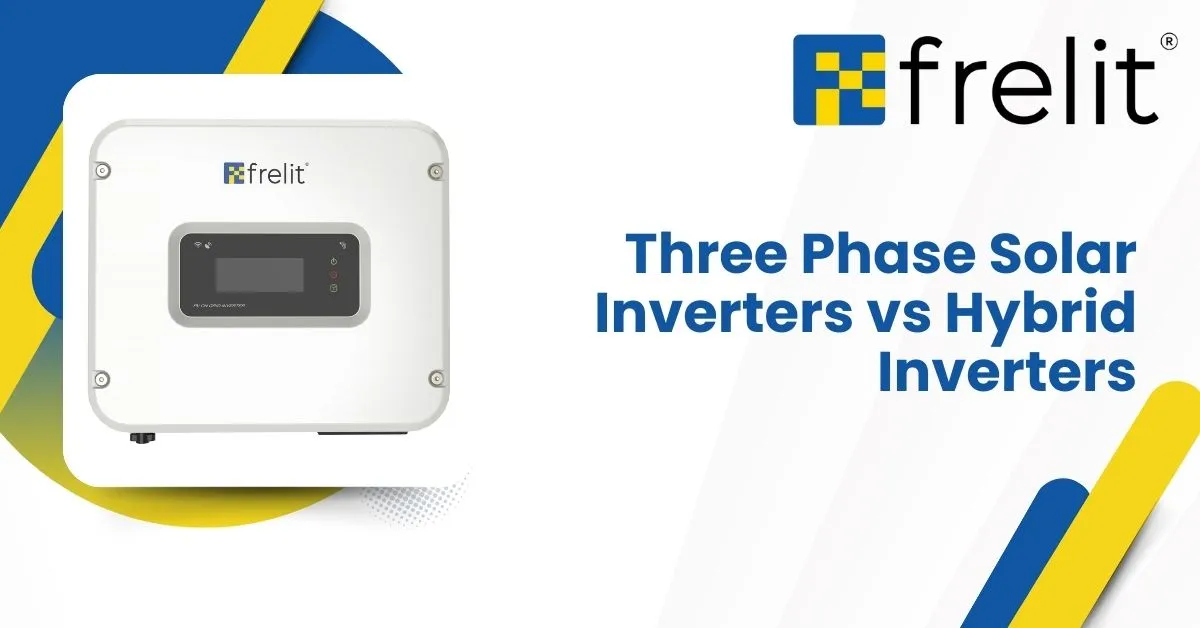
The Three Phase Solar Inverters are widely used in large solar installations, while Hybrid Inverters are becoming a popular choice for users planning to add solar battery storage. As solar adoption grows worldwide, selecting the right inverter can significantly impact system efficiency, return on investment (ROI), and grid compatibility.
A solar inverter plays a vital role by converting DC power from solar panels into AC power used by homes and businesses. The right choice depends on factors like electricity load, battery requirement, backup needs, and the type of grid connection.
What Is a Three Phase Solar Inverter?
A Three Phase Solar Inverters are designed for properties with three-phase electrical connections, offering balanced energy output, improved load handling, and higher grid compatibility—making them a top choice for commercial buildings, industrial setups, and large residential properties.
How Three Phase Solar Inverters Work
A three-phase inverter evenly distributes solar energy across all three electrical phases. This ensures stable voltage levels, reduced stress on equipment, and smoother power delivery.
Advantages of Three Phase Solar Inverters
- Ideal for large homes and commercial buildings
- Efficient energy distribution
- Works with larger solar panel capacities
- Reduces voltage fluctuation and phase imbalance
Limitations of Three Phase Solar Inverters
- Most models do not support battery storage
- Limited backup function during power failure
- Adding batteries later requires additional components
What Is a Hybrid Solar Inverter?
A Hybrid Solar Inverter combines the functions of a grid-tied inverter and a battery inverter. This makes hybrid inverters ideal for users who want solar energy storage, backup capability, and smart power management.
How Hybrid Solar Inverters Function
Hybrid solar inverters manage power flow between:
- Solar panels
- Grid supply
- Solar battery bank
- Household or commercial loads
They intelligently switch between these sources based on availability and user preference.
Advantages of Hybrid Solar Inverters
- Battery-ready design
- Provides backup during power cuts
- Maximizes self-consumption and energy independence
- Supports smart load management
Limitations of Hybrid Solar Inverters
- Higher upfront investment
- Requires battery maintenance and planning
- Installation complexity may be higher
Three Phase Solar Inverters vs Hybrid Inverters
The Three Phase Solar Inverters serve high-load systems, while Hybrid Inverters offer battery integration and blackout protection. The right choice depends on your power needs, energy goals, and budget.
| Feature | Three Phase Solar Inverter | Hybrid Solar Inverter |
|---|---|---|
| Battery Support | Not built-in | Yes |
| Backup Power | Limited or none | Full backup |
| Best Use Case | Large homes & commercial | Homes needing battery storage |
| Cost (without battery) | Lower | Moderate |
| Cost (with battery support) | Higher + extra components | Higher but integrated |
Which Inverter Is Best for Your Solar System?
Choosing between Three Phase Solar Inverters vs Hybrid Inverters depends on usage patterns, grid type, and backup expectations.
Best for Homeowners
If energy backup is important due to power cuts, a Hybrid Inverter is the best long-term investment.
Best for Businesses and Industries
If your building has high power demand and a three-phase supply, a Three Phase Solar Inverter offers the best load balancing and performance.
Best for Future Battery Installation
If you plan to add solar storage later, choosing a battery-ready hybrid inverter may save time and cost in the future.
Looking for reliable power and long-term savings?
Contact us and start your solar journey with confidence.
Cost Comparison and Practical Applications
Costs vary depending on system size, battery capacity, and installation type.
| System Type | Approximate Cost | Ideal User |
|---|---|---|
| Three Phase Solar Inverter System | Lower initial cost | Commercial setups, large homes |
| Hybrid Solar Inverter with Battery Storage | Higher initial cost, high savings long-term | Homes needing backup power |
Installation Requirements and Compatibility Notes
The Three Phase Solar Inverters require load balancing and three-phase wiring infrastructure, while Hybrid Solar Inverters need proper battery configuration, wiring protection, and backup load planning.
Key installation considerations:
- Electrical phase type
- Backup power needs
- Battery compatibility
- Local grid regulations
Pros and Cons Summary
| Feature | Three Phase Solar Inverter | Hybrid Solar Inverter |
|---|---|---|
| Efficiency | Yes | Yes |
| Battery Support | No | Yes |
| Backup Power | No | Yes |
| Ideal For | Large homes, offices, industries | Homes with battery backup needs |
Frequently Asked Questions
What is the difference between a three-phase and hybrid solar inverter?
A three-phase inverter balances energy across three electrical phases, while a hybrid inverter includes built-in battery management and backup capability.
Can three-phase inverter support batteries?
Most standard models cannot, but advanced or add-on systems may allow battery integration.
Which inverter is better for homes?
A hybrid inverter is ideal for powering homes with energy storage and blackout protection.
Is a hybrid inverter worth the investment?
Yes—especially for areas with frequent power outages or users seeking energy independence.
Can hybrid inverters work with three-phase systems?
Yes, many modern hybrid inverters support three-phase configurations.
Conclusion
Whether you choose a Three Phase Solar Inverter for high-load efficiency or a Hybrid Solar Inverter for battery backup and energy independence, understanding your energy needs, grid type, and long-term plans is essential. Both inverter types offer benefits, but the right selection ensures maximum solar efficiency, energy security, and long-term savings.