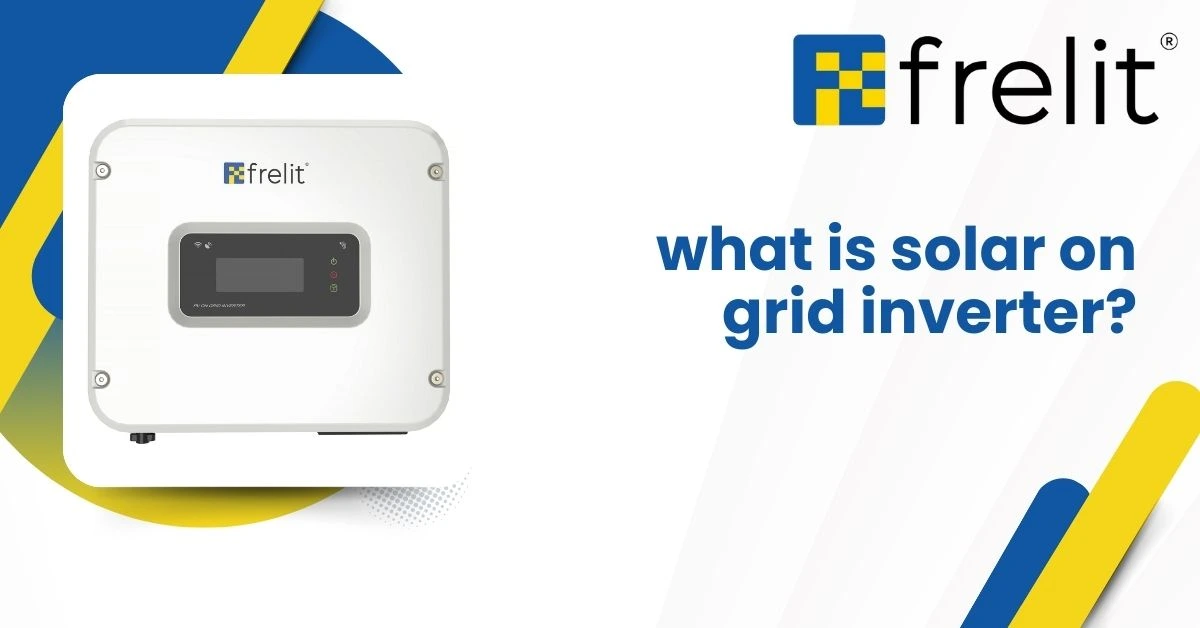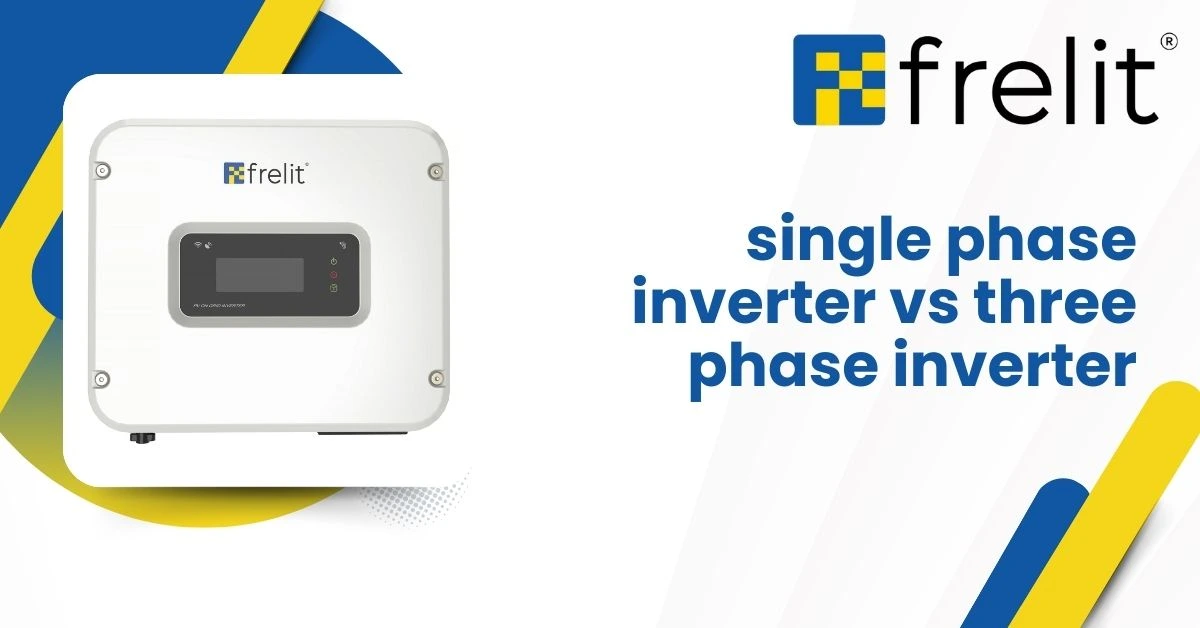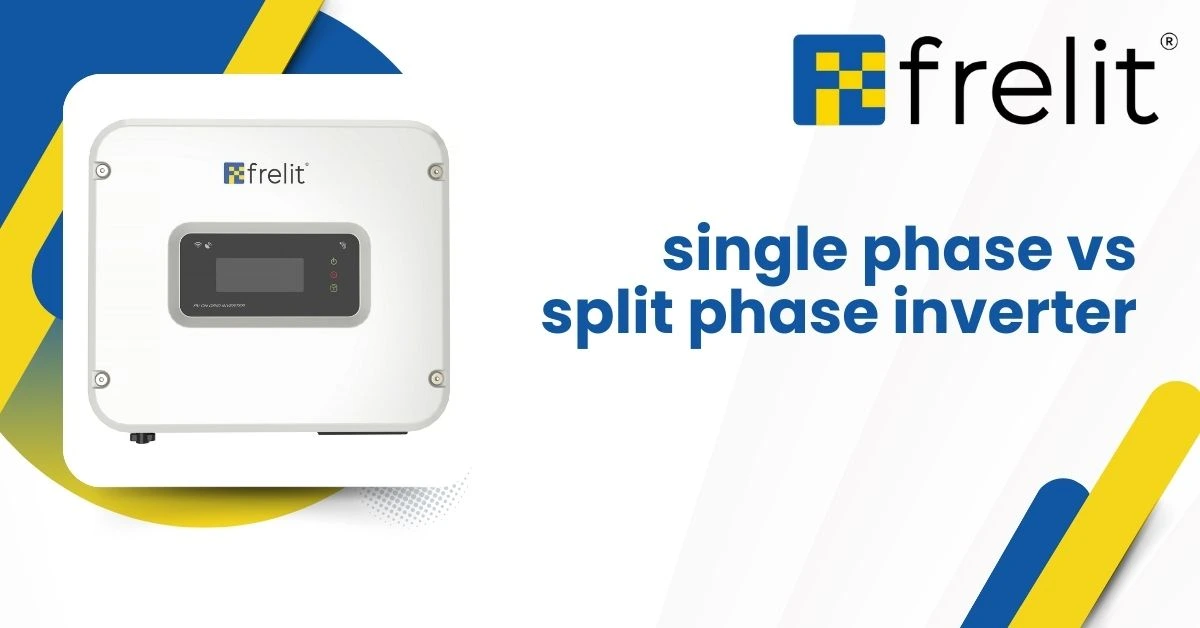

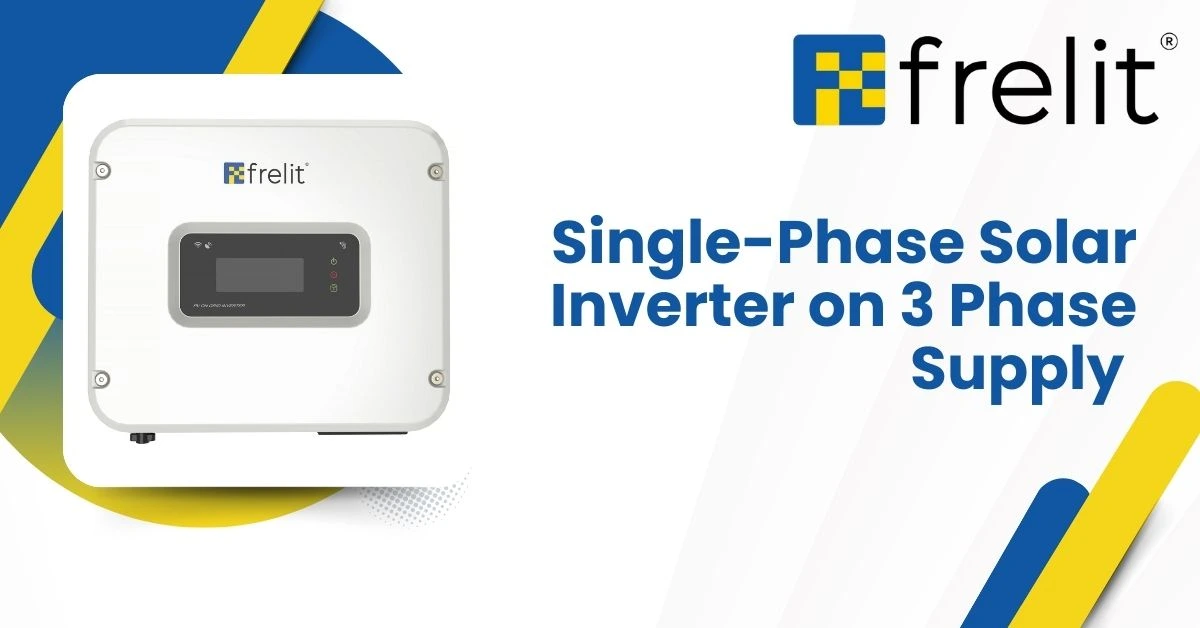
A single-phase solar inverter on 3 phase supply using Single Phase On-Grid Inverters has become one of the most searched solar topics today because many homes, offices, shops, apartments, and commercial buildings are connected to three-phase electricity but want a more economical and practical solar solution. Three-phase power connections are designed to handle higher electrical loads, but three-phase solar inverters are usually more expensive, making many users look for a cost-effective alternative. Single Phase On-Grid Inverters offer an excellent balance between price, performance, and simplicity, which makes them a popular choice for small to medium rooftop solar installations. They are widely available, easy to maintain, and capable of delivering reliable grid-connected solar power when installed correctly on a three-phase supply.
When this type of system is designed properly—with the right phase selection, correct wiring, and proper net-metering approval—it can deliver strong energy generation, significant electricity bill savings, and full compliance with utility and grid safety regulations. However, the success of a single-phase solar inverter on 3 phase supply also depends on factors such as phase balancing, load distribution, voltage stability, and how the electricity meter calculates imported and exported energy.
This complete guide explains in clear and simple terms how Single Phase On-Grid Inverters work with a three-phase supply, how to connect them safely, how net metering and billing are calculated, and how to optimize the system to achieve the highest possible return on your solar investment through better self-consumption, reduced grid dependency, and long-term reliable performance.
Can You Use Single Phase On-Grid Inverters on a 3 Phase Supply?
A single phase solar inverter on 3 phase supply using Single Phase On-Grid Inverters is permitted in most regions, provided the system is installed in accordance with local electricity utility regulations and grid safety standards. This type of configuration is widely accepted because it allows property owners with three-phase power connections to use a more affordable single-phase solar solution while remaining compliant with grid requirements.
Single Phase On-Grid Inverters can be easily connected to a three-phase electricity supply by linking the inverter to any one selected phase—L1, L2, or L3—along with neutral and proper earthing. The inverter then exports the generated solar electricity into that chosen phase, while the power grid automatically distributes the energy across the network. At the same time, the net meter records how much electricity is imported from the grid and how much solar power is exported, which is used to calculate your final electricity bill.
This type of installation is commonly used in residential and commercial properties such as homes with three-phase meters, shops and office spaces, apartment buildings, villas, and small commercial facilities that require stable power but want a cost-effective rooftop solar system.
The actual savings achieved from a single-phase solar inverter on 3 phase supply depend on important factors such as selecting the correct phase for connection, how net metering is calculated by the utility, and how electrical loads are distributed across the three phases during daytime usage.
What a Single Phase On-Grid Inverters Connect to a Three Phase System?
A single-phase solar inverter on 3 phase supply using Single Phase On-Grid Inverters connects to only one of the three available phases—L1, L2, or L3—along with neutral and proper earthing. Even though the building receives three-phase electricity, a Single Phase On-Grid Inverter is designed to synchronize with just one phase of the grid and inject solar power into that phase.
Inside a three-phase distribution board, each phase supplies power to different circuits and appliances. When a Single Phase On-Grid Inverter is connected, it is usually linked to the phase that has the highest daytime electricity usage, such as air conditioners, office equipment, water pumps, or commercial machines. This allows the solar power generated by the inverter to be consumed directly by those loads before any excess energy is exported to the grid.
The inverter continuously monitors the voltage and frequency of the selected phase and matches its output to the grid. As solar panels produce electricity, the inverter converts DC power into AC and feeds it into that phase. Appliances connected to that phase use the solar energy first, and any unused power flows back through the net meter into the grid. Meanwhile, loads on the other two phases continue to draw electricity from the grid unless your net-metering system allows energy balancing across all phases.
Net Metering & Billing with Single Phase On-Grid Inverters on 3 Phase Supply
Net metering plays a crucial role in determining how much money you save when using a single phase solar inverter on 3 phase supply with Single Phase On-Grid Inverters. Even if your solar panels are generating a large amount of electricity, the way your utility calculates imported and exported energy will decide how effectively that solar power reduces your electricity bill.
When a Single Phase On-Grid Inverter is connected to a three-phase electricity supply, it exports solar power into only one phase. The electricity meter then measures how much energy you send to the grid and how much you take from it. However, utilities follow different billing methods to calculate this data, and this can significantly impact your final bill.
There are two common net metering methods used for three-phase connections. The first is total net metering across all phases. In this method, the meter combines electricity import and export from all three phases. This means that even if your solar inverter exports power on one phase and your appliances consume electricity on the other two phases, the solar energy still offsets your total consumption. In this case, Single Phase On-Grid Inverters can deliver excellent bill savings even on a three-phase supply.
The second method is phase-wise net metering, where the meter calculates import and export separately for each phase. In this setup, solar power generated by your Single Phase On-Grid Inverter only reduces the consumption of the phase it is connected to. If most of your daytime electrical loads are on other phases, you may still draw grid power on those phases while exporting solar power on the inverter phase. This can reduce overall savings even though your solar system is producing enough energy.
Because of this, correct phase selection and load distribution become extremely important when using a single-phase solar inverter on 3 phase supply. Before installation, it is always recommended to check with the utility or installer about the type of net metering used, so the system can be designed to deliver the maximum financial benefit.
Phase Balancing with Single Phase On-Grid Inverters
Phase balancing with Single Phase On-Grid Inverters is one of the most important aspects of achieving maximum performance and savings when using a single phase solar inverter on a 3-phase supply. Since a Single Phase On-Grid Inverter feeds solar electricity into only one phase, the way your electrical loads are distributed across the three phases directly affects how much of that solar power is used. Without proper phase balancing, solar energy may be exported on one phase while electricity is still being imported on the other phases, reducing self-consumption and lowering your overall solar benefits.
- Phase balancing is the most important factor when using Single Phase On-Grid Inverters on a three-phase electricity supply.
- A single-phase solar inverter on 3 phase supply sends solar power into only one phase, so matching that phase with actual electricity usage is essential.
- If phase balancing is not done properly, the inverter may export solar power on one phase while the building continues to import electricity on the other two phases.
- This situation leads to lower self-consumption, higher grid imports, and reduced electricity bill savings even though the solar system is generating well.
How Phase Mismatch Affects Performance
- If the inverter is connected to Phase L1 but most appliances run on Phase L2 and L3, solar energy will not be used effectively.
- The inverter will send excess power to the grid while you keep buying power from the utility on the other phases.
- This results in poor financial returns from your solar system.
Best Practices for Proper Phase Balancing
- Always connect Single Phase On-Grid Inverters to the phase with the highest daytime electricity usage.
- Move high-consumption appliances such as air conditioners, water pumps, geysers, elevators, and office equipment to the same phase as the inverter.
- Distribute lighting and socket circuits evenly to avoid overload on non-solar phases.
- Monitor inverter output and phase load after installation to fine-tune the balance.
Advanced Phase Balancing Solutions
- In large homes or commercial buildings, install multiple Single Phase On-Grid Inverters, with one inverter connected to each phase.
- This allows solar power to be generated on all three phases, improving system stability and maximizing self-consumption.
- Multiple inverters also help reduce voltage rise and inverter tripping issues.
Benefits of Proper Phase Balancing
- Higher solar self-consumption
- Lower electricity bills
- Reduced power export losses
- Improved voltage stability
- Longer inverter life
- Better return on investment
When a Three Phase Inverter Is Better than Single Phase On-Grid Inverters?
A three-phase inverter becomes the better choice than Single Phase On-Grid Inverters in many medium-to-large solar installations because it distributes power evenly across all three phases, improving stability and performance.
Choose a Three-Phase Inverter When:
Your solar system size exceeds 8–10 kW
Large solar plants generate more power than a single phase can efficiently handle. A three-phase inverter spreads the load across all phases, preventing overload and voltage rise on any single phase.
Your electrical loads are evenly distributed across all three phases
If air conditioners, machinery, lighting, and equipment are spread across L1, L2, and L3, a three-phase inverter ensures solar power is delivered to all phases equally, increasing self-consumption and lowering grid imports.
Voltage stability is critical in your area
In areas with grid voltage fluctuations, a three-phase inverter maintains better voltage balance. It reduces the risk of inverter tripping, improves power quality, and protects electrical appliances.
You want balanced solar export to the grid
A three-phase inverter injects solar energy equally into all three phases, preventing phase imbalance and improving compatibility with utility grid regulations.
Your utility has strict phase-imbalance limits
Some electricity providers require balanced power export. A three-phase inverter helps meet these rules more easily than a single-phase system.
Wiring Options for Single Phase On-Grid Inverters
Wiring options play an important role in how effectively Single Phase On-Grid Inverters perform when connected to a three-phase electricity supply. The most common and economical configuration is connecting a single-phase inverter to one selected phase. This option keeps installation costs low and is suitable for homes and small commercial buildings, but solar energy mainly offsets consumption on that single phase. Another option is to use a three-phase inverter, which spreads solar power evenly across all three phases, providing better balance and improved voltage stability, especially for larger systems. Additionally, load shifting—moving high-consumption appliances such as air conditioners and pumps to the solar-connected phase—can greatly improve self-consumption and increase overall savings without changing the inverter.
Not sure which Single Phase On-Grid Inverter setup is right for your system? Contact us today and get expert guidance tailored to your needs.
Safety & Compliance for Single Phase On-Grid Inverters
To ensure safe, reliable, and legally approved operation, Single Phase On-Grid Inverters must follow essential safety and utility standards.
Key Safety & Compliance Requirements:
Anti-islanding protection
This is a critical safety feature that automatically shuts down the inverter when grid power is lost. It prevents solar electricity from flowing into power lines during outages, protecting utility workers and preventing equipment damage.
Proper earthing (grounding)
All Single Phase On-Grid Inverters must be correctly grounded to safely discharge electrical faults, lightning surges, and leakage currents. Good earthing protects both people and electrical equipment.
AC and DC isolators
Isolator switches allow the solar system to be safely disconnected for maintenance, emergency situations, or repairs. AC isolators separate the inverter from the grid, while DC isolators separate the solar panels from the inverter.
Surge protection devices (SPD)
SPDs protect the inverter and other electrical equipment from voltage spikes caused by lightning or grid disturbances.
Correct cable sizing and circuit breakers
Wires, breakers, and connectors must be rated for the inverter’s current and voltage to prevent overheating, fire risks, and voltage drops.
Net metering approval from the utility
Before exporting solar power to the grid, the electricity provider must approve the system and install a net meter. This ensures that all exported and imported energy is recorded correctly.
Utility inspection and certification
Most utilities require inspection of the solar system before allowing grid connection to confirm safety and compliance.
Troubleshooting Single Phase On-Grid Inverters on 3 Phase Supply
Problems in a single-phase solar inverter on 3 phase supply using Single Phase On-Grid Inverters are usually related to phase mismatch, voltage imbalance, or meter configuration. Below are the most common issues and their solutions.
Common Problems & Solutions
Low electricity bill savings
This usually happens when most of your electrical loads are on phases different from the one connected to the inverter.
Solution: Shift high-consumption appliances (ACs, pumps, machinery, office equipment) to the inverter phase or consider a three-phase inverter.
High solar export but still high grid import
Solar energy is being exported on one phase while other phases continue to draw power from the grid.
Solution: Improve phase balancing or install multiple Single Phase On-Grid Inverters, one on each phase.
Inverter tripping during peak sunlight
This often occurs due to high voltage on the connected phase caused by excessive export.
Solution: Check cable sizing, phase selection, and grid voltage settings (through a technician).
Confusing or low export readings on the meter
The meter may be calculating energy phase-wise rather than across all phases.
Solution: Verify net-meter configuration and billing method with the utility.
Uneven voltage or phase imbalance warnings
Occurs when one phase is overloaded with solar export.
Solution: Redistribute loads or upgrade to a three-phase inverter.
Troubleshooting Single Phase On-Grid Inverters on 3 Phase Supply
When a Single Phase On-Grid Inverter is used on a three-phase electricity connection, problems such as low savings, frequent inverter tripping, or incorrect export readings are usually caused by phase mismatch or imbalance. Since the inverter feeds solar power into only one phase, any difference between where solar is generated and where electricity is consumed can reduce system performance.
If your electricity bill is not reducing as expected, it often means most of your appliances are running on other phases instead of the phase connected to the inverter. Similarly, inverter tripping during peak sunlight hours is commonly caused by high voltage on the solar phase due to excess export. In some cases, export readings may appear low or confusing because the net meter is measuring energy phase-wise.
Most of these issues can be solved by rebalancing electrical loads, such as moving high-usage appliances to the solar-connected phase. For larger systems or buildings with evenly distributed loads, upgrading to a three-phase inverter is the best solution, as it distributes solar power evenly across all phases and improves overall stability and savings.
Frequently Asked Questions
Can a Single Phase On-Grid Inverter work on a 3-phase power supply?
Yes, a Single Phase On-Grid Inverter can work on a three-phase supply by connecting to one selected phase and exporting solar power into that phase while the grid distributes the energy.
Will a single-phase solar inverter reduce my full electricity bill on a 3-phase connection?
It depends on your net-metering method. If your meter calculates total energy across all phases, it will reduce the full bill. If it is phase-wise, savings depend on phase balancing.
Which phase should a Single Phase On-Grid Inverter be connected to?
The inverter should be connected to the phase that has the highest daytime electricity usage, such as where air conditioners, pumps, or office equipment are connected.
Why does my inverter export power, but I still get a high electricity bill?
This usually happens due to phase mismatch, where solar is generated on one phase but most consumption is on other phases, reducing self-consumption.
When should I upgrade to a three-phase solar inverter?
You should consider a three-phase inverter if your solar system is larger than 8–10 kW, loads are evenly distributed across phases, or voltage stability is a concern.
Conclusion
Using a single-phase solar inverter on 3 phase supply with Single Phase On-Grid Inverters is a smart and cost-effective solution for many homes, shops, and small commercial buildings that already have three-phase electricity. When designed and installed correctly, this setup can deliver strong solar generation, reliable grid connection, and significant reductions in electricity bills without the higher cost of a three-phase inverter.
By following correct wiring practices, safety standards, and phase-balancing strategies, you can ensure that your Single Phase On-Grid Inverter system delivers long-term reliability, compliance, and the best possible return on your solar investment.