
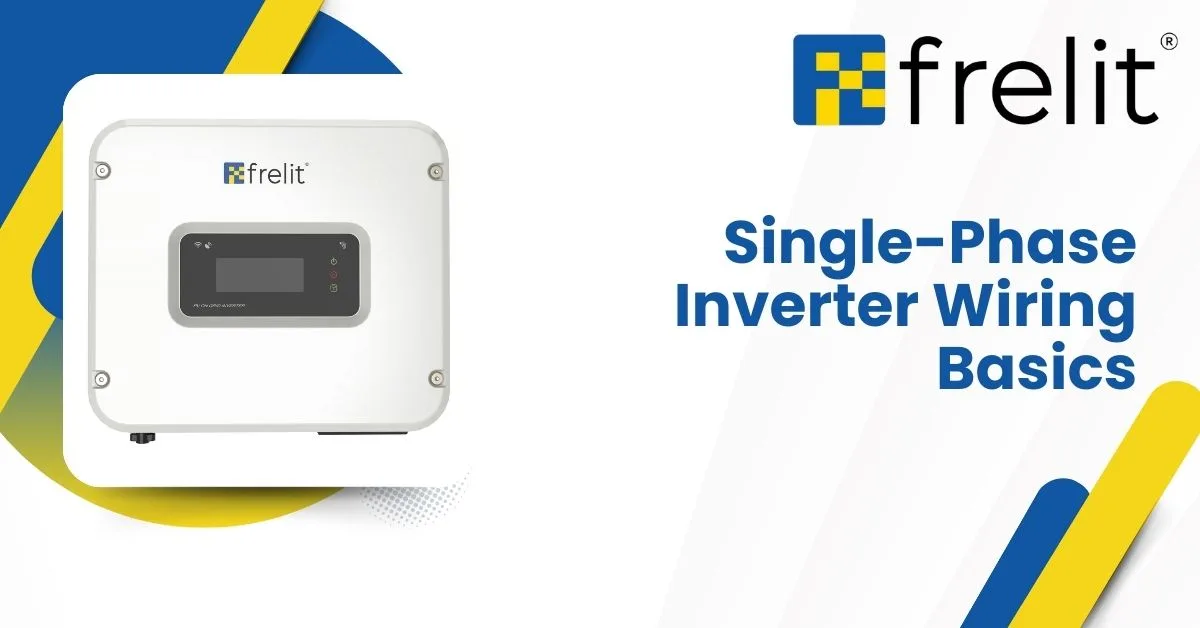
Correct wiring ensures that electricity flows safely and efficiently from solar panels to household appliances. Poor wiring can cause power loss, inverter faults, or safety hazards over time. Single Phase On-Grid Inverters require precise wiring practices because they operate in synchronization with the utility grid and must meet electrical safety standards. When wiring is done correctly, system reliability and energy output improve significantly.
What Is Single-Phase Inverter Wiring?
Single-phase inverter wiring refers to the proper connection of solar panels, inverter, protection devices, and the home distribution board. It includes both DC wiring from panels and AC wiring to the grid and loads. Single Phase On-Grid Inverters use this wiring setup to convert DC power into AC electricity while maintaining voltage, frequency, and grid safety requirements.
Components Required for Single-Phase Inverter Wiring
Several essential components are involved in inverter wiring, each playing a critical role in safety and performance.
DC Side Components
The DC side carries power from solar panels to the inverter using DC cables, MC4 connectors, and a DC isolator. Incorrect polarity or poor cable quality can reduce efficiency. Single Phase On-Grid Inverters depend on proper DC connections to operate smoothly and avoid internal faults.
AC Side Components
The AC side connects the inverter output to the home’s distribution board using AC cables, MCBs, MCCBs, and an AC isolator. Single Phase On-Grid Inverters rely on secure AC wiring to deliver stable electricity to household loads and export excess power to the grid.
Earthing System
Earthing protects both equipment and people from electrical faults and surges. A proper earthing setup is mandatory because Single Phase On-Grid Inverters remain electrically connected to the grid at all times.
Single-Phase Inverter Wiring Diagram Explained
A wiring diagram provides a visual representation of how each component is connected. It shows the flow of electricity from panels to inverter and then to the grid. Single Phase On-Grid Inverters follow a simple and standardized wiring layout that helps installers avoid mistakes and ensures compliance with electrical norms.
Planning a solar installation and want wiring done right?
Contact Us for accurate information and expert assistance.
Step-by-Step Single-Phase Inverter Wiring Process
Following a step-by-step wiring process ensures safety and consistent system performance.
DC Wiring from Solar Panels to Inverter
Solar panels are connected in series or parallel, and DC cables carry power to the inverter through a DC isolator. Correct polarity is essential because Single Phase On-Grid Inverters are sensitive to DC wiring errors.
AC Wiring from Inverter to Distribution Board
The inverter’s AC output is connected to the main distribution board using appropriate cable size and protection devices. Single Phase On-Grid Inverters require stable AC connections to synchronize properly with the grid.
Earthing and Protection Connections
Separate earthing for inverter and panels protects against faults and lightning. This is crucial since Single Phase On-Grid Inverters operate continuously during daylight hours.
Net Meter Connection
In on-grid systems, a net meter records both imported and exported electricity. Single Phase On-Grid Inverters enable net metering by sending surplus power back to the grid.
Wiring Safety Guidelines for Single-Phase Inverters
Electrical safety is a top priority during inverter wiring. Proper cable sizing, secure terminations, surge protection devices, and correct earthing reduce risks. Single Phase On-Grid Inverters must comply with safety standards because they interact directly with the public grid and household electrical systems.
Single-Phase Inverter Wiring Cable Size
| System Capacity | DC Cable Size | AC Cable Size | Recommended Use |
|---|---|---|---|
| 1–2 kW | 4 sq.mm | 2.5 sq.mm | Small homes |
| 3–5 kW | 6 sq.mm | 4 sq.mm | Medium homes |
| 5–7 kW | 10 sq.mm | 6 sq.mm | Larger homes |
Correct cable size minimizes voltage drop and improves efficiency.
Common Wiring Mistakes to Avoid
Many inverter issues arise due to basic wiring mistakes such as reverse polarity, loose connections, undersized cables, and poor earthing. These errors reduce efficiency and increase safety risks. Single Phase On-Grid Inverters perform best when wiring follows standard guidelines and professional installation practices.
Impact of Proper Wiring on Inverter Performance
Good wiring directly affects energy output, safety, and inverter lifespan. Reduced power loss and stable voltage improve system reliability. Single Phase On-Grid Inverters deliver higher efficiency and fewer breakdowns when wiring is done correctly from the start.
Frequently Asked Questions
How do you wire a single-phase inverter?
Wiring involves connecting solar panels on the DC side and linking the inverter to the distribution board and grid on the AC side with proper protection.
What cable size is required for a single-phase inverter?
Cable size depends on system capacity and distance, usually between 4 sq.mm and 10 sq.mm for homes.
Is earthing mandatory for inverter wiring?
Yes, earthing is essential for safety, surge protection, and reliable operation.
Can inverter wiring be done by homeowners?
Wiring should always be handled by qualified electricians or solar installers.
What happens if wiring is incorrect?
Incorrect wiring can cause power loss, inverter faults, and serious safety hazards.
Conclusion
Understanding inverter wiring basics helps ensure a safe and efficient solar installation. When wiring is done correctly using quality components and proper practices, Single Phase On-Grid Inverters deliver reliable performance, improved efficiency, and long-term savings for residential solar users.