
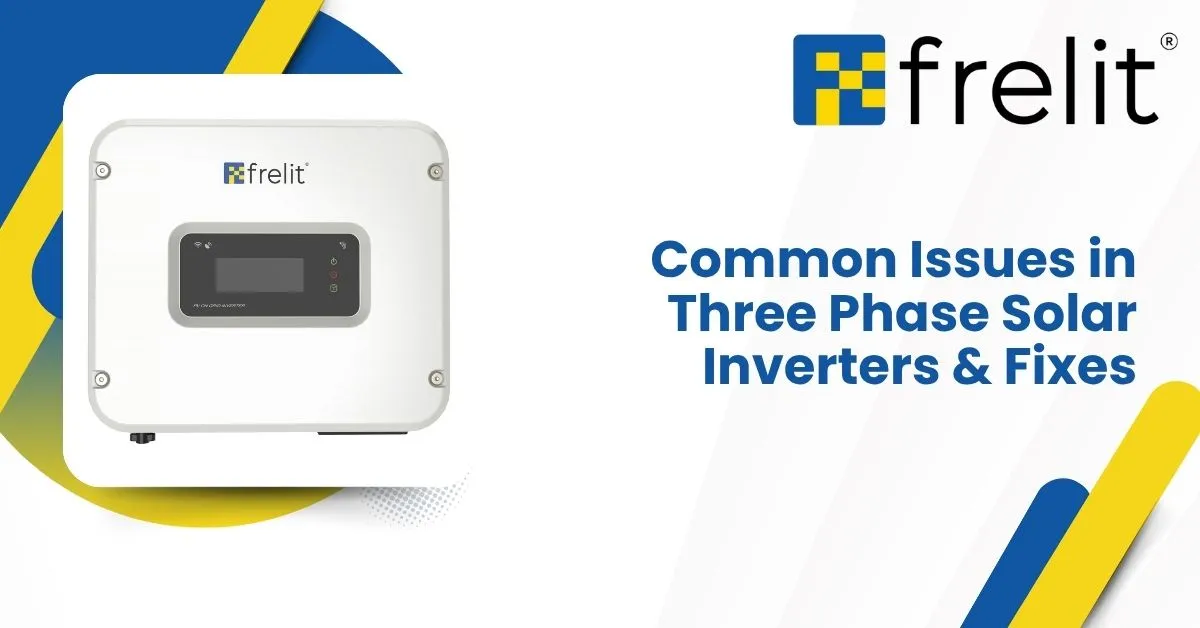
Three phase solar inverters play a crucial role in delivering stable, efficient, and reliable power—especially in commercial, industrial, and large residential solar systems. But like any advanced electrical device, they can face performance issues over time. This guide explains the most common issues in three phase solar inverters, why they happen, and the best fixes to restore smooth operation.
How Three Phase Solar Inverters Work
Three Phase On-Grid Inverters rely on phase balancing and smart MPPT technology to deliver efficient and stable power output. A three phase solar inverter converts DC electricity from solar panels into AC electricity across three phases—ensuring balanced load distribution, smooth grid integration, and high efficiency. Understanding how it works helps identify where issues may arise.
Common Issues in Three Phase Solar Inverters & Their Fixes
Many Three Phase On-Grid Inverters experience recurring performance and efficiency issues caused by grid fluctuations, wiring faults, or environmental conditions.
Below are the most frequent problems along with their practical solutions.
Grid Fluctuation & Voltage Imbalance
The Three Phase On-Grid Inverters often face grid-related issues when voltage levels vary across phases.
Common Causes:
- Unstable local grid
- Imbalanced loads
- Faulty wiring connections
Fixes:
- Install a voltage stabilizer
- Ensure proper grounding
- Balance loads across each phase
- Inspect wiring for loose connections
Overheating During Peak Load
A Three Phase On-Grid Inverters may overheat due to high loads, poor airflow, or environmental heat.
Common Causes:
- Direct sunlight exposure
- Blocked air vents
- High ambient temperature
Fixes:
- Improve ventilation around the inverter
- Clean dust from cooling vents
- Install sunshade or cover
- Reduce connected load during peak hours
MPPT Tracking Failure
The Three Phase On-Grid Inverters rely heavily on MPPT technology, and MPPT failure directly reduces solar power generation.
Common Causes:
- Panel shading
- Mismatched solar modules
- MPPT circuit malfunction
Fixes:
- Remove shading or obstacles
- Match panel voltage/current ratings
- Check wiring between panels and inverter
- Replace faulty MPPT controller
Frequent Shutdowns or Restart Loops
A Three Phase On-Grid Inverters can enter shutdown cycles when system protection mechanisms are triggered.
Common Causes:
- Overload
- Poor grid quality
- Outdated firmware
Fixes:
- Reduce inverter load
- Update inverter firmware
- Inspect grid connection and voltage levels
- Reset inverter if required
Low Output Power or Efficiency Drop
The Three Phase On-Grid Inverters may generate less power due to panel issues or internal faults.
Common Causes:
- Dirty or damaged solar panels
- Incorrect wiring or loose terminals
- Aging inverter components
Fixes:
- Clean panels regularly
- Check and tighten DC/AC cable connections
- Replace degraded inverter components
- Re-optimize system configuration
Communication Errors (WiFi/GPRS/App Monitoring)
The Three Phase On-Grid Inverters use smart monitoring systems that may fail due to connection issues.
Common Causes:
- Weak internet signal
- Faulty monitoring module
- Incorrect network settings
Fixes:
- Reset WiFi/GPRS module
- Improve router signal strength
- Reconfigure app or monitoring portal
- Replace communication module if needed
Fault Codes & Error Messages
The Three Phase On-Grid Inverters display fault codes when internal protection circuits detect abnormalities.
Common Causes:
- Relay faults
- Grid disconnection
- Overcurrent/overvoltage
Fixes:
- Refer to the inverter’s error code list
- Reset after resolving the issue
- Call a qualified technician if the code persists
Issue vs Cause vs Fix
| Issue | Main Cause | Fix |
|---|---|---|
| Overheating | Poor ventilation | Improve airflow, clean vents |
| Low Output | Dirty panels | Clean panels, check wiring |
| Shutdown Loop | Grid fluctuation | Stabilize voltage, update firmware |
| MPPT Error | Panel mismatch | Remove shading, correct wiring |
| Communication Issue | Weak signal | Reset module, boost internet |
When to Call a Professional Technician
A Three Phase On-Grid Inverters may require expert service when internal components fail or repeated errors occur.
Seek professional help when:
- The inverter displays persistent fault codes
- Burning smell, sparks, or abnormal noise occurs
- Efficiency drops drastically
- Firmware updates fail
- Phase imbalance becomes frequent
Attempting to repair internal faults without training can void warranties and create safety risks.
Need help fixing inverter issues or improving solar performance?
Contact us today for expert guidance and quick support.
How to Prevent Future Issues
A Three Phase On-Grid Inverters last longer when maintained properly and inspected regularly.
Prevention Tips:
- Clean solar panels every 2–3 months
- Maintain proper ventilation around the inverter
- Perform annual professional inspections
- Update firmware regularly
- Keep wiring protected from heat and moisture
Frequently Asked Questions
What are the most common issues in three phase solar inverters?
Common issues include overheating, MPPT failure, low output power, communication errors, and frequent shutdowns.
Why is my three phase solar inverter overheating?
Overheating occurs due to blocked vents, high temperature, or excessive load on the inverter.
How do I fix low output in a three phase solar inverter?
Clean panels, inspect wiring, check MPPT settings, and remove shading to improve output.
Why does my inverter show frequent error codes?
Error codes appear due to grid faults, internal component failures, or protection circuit triggers.
Can I reset a three phase inverter myself?
Yes, but only if the error is minor. For recurring issues, always seek professional support.
Conclusion
The Three phase solar inverters are designed for high performance, but like any system, they require regular maintenance and timely troubleshooting. Identifying common issues early and implementing the right fixes ensures better energy efficiency, system stability, and long-term reliability.