
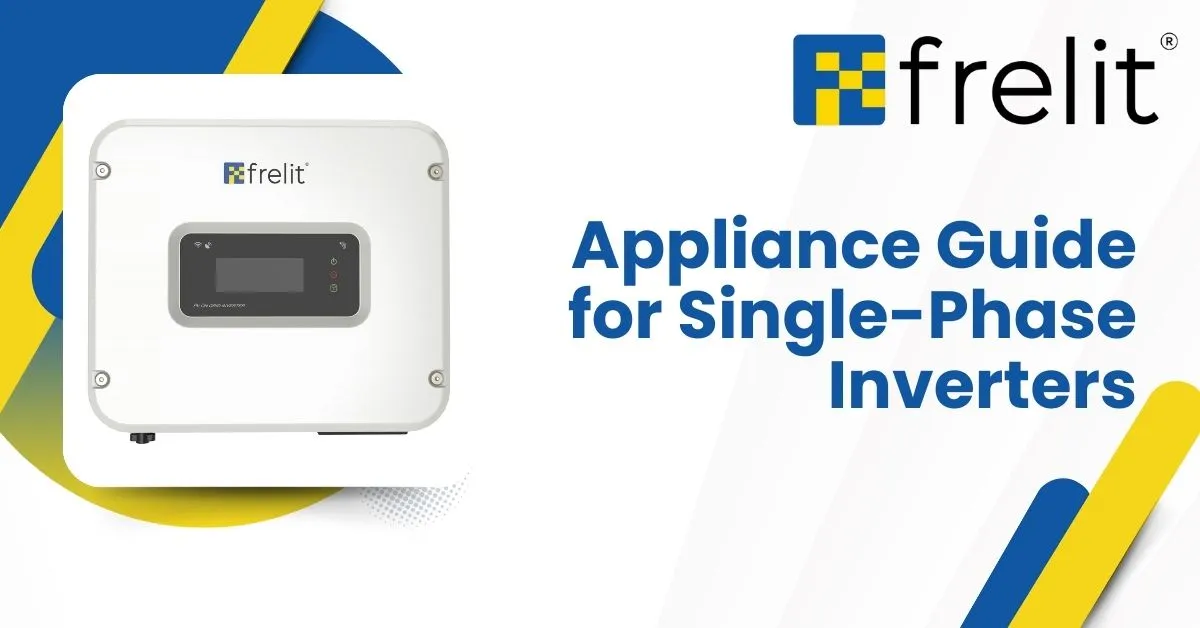
Understanding appliance compatibility is one of the most important steps when planning a home inverter or solar system. A well-designed system using Single Phase On-Grid Inverters ensures that your daily appliances run smoothly without overloads, shutdowns, or performance issues, helping homeowners maximize energy efficiency and protect their electrical equipment.
How Single-Phase Inverters Power Home Appliances?
Solar panels generate DC power, which household appliances cannot use directly. Through advanced power electronics, Single Phase On-Grid Inverters convert DC electricity into grid-quality AC power that appliances can safely operate on throughout the day. These inverters constantly balance solar input, grid supply, and household demand. With intelligent control, Single Phase On-Grid Inverters ensure appliances receive stable voltage and frequency, which is critical for electronics like televisions, computers, and smart home devices.
Key Factors to Consider Before Connecting Appliances
Not all appliances behave the same way when powered by an inverter system. Before connecting loads, Single Phase On-Grid Inverters must be evaluated based on capacity, surge handling, and system configuration to avoid unexpected shutdowns.
Inverter Capacity (VA/Watt Rating)
The inverter’s rated capacity determines how much load it can handle at one time. To run multiple appliances safely, Single Phase On-Grid Inverters should have a watt rating higher than the combined running load of all connected devices.
Starting vs Running Power
Many appliances consume more power during startup than during normal operation. Appliances with motors, such as refrigerators and pumps, require surge power, which Single Phase On-Grid Inverters must be capable of delivering without tripping or shutting down.
Battery & Grid Availability (On-Grid / Hybrid)
On-grid systems rely on grid power, while hybrid systems include battery backup. In standard configurations, Single Phase On-Grid Inverters power appliances only when the grid is available, making system type an important factor in appliance planning.
Appliance Categories Supported by Single-Phase Inverters
Household appliances can be grouped by power consumption, making it easier to plan loads. Based on capacity and configuration, Single Phase On-Grid Inverters can support a wide range of appliances efficiently.
Low-Power Appliances
Low-power appliances are ideal for inverter operation and have minimal impact on system load. Devices like LED lights, ceiling fans, routers, and phone chargers work seamlessly with Single Phase On-Grid Inverters and can usually run together without issues.
Medium-Power Appliances
Medium-load appliances include televisions, refrigerators, computers, and washing machines. With proper sizing and surge handling, Single Phase On-Grid Inverters can run these appliances reliably while maintaining system stability.
High-Power Appliances
High-power appliances such as air conditioners, microwave ovens, and water pumps demand careful planning. Only high-capacity Single Phase On-Grid Inverters with strong surge capability should be used to support these loads safely.
Single-Phase Inverters
Choosing appliances becomes easier when their power requirements are clearly compared. The table below shows how Single Phase On-Grid Inverters typically handle common household appliances.
| Appliance | Average Power (W) | Compatibility |
|---|---|---|
| LED Lights | 10–20 | Yes |
| Ceiling Fan | 60–90 | Yes |
| Television | 80–150 | Yes |
| Refrigerator | 150–400 | Yes (High Surge) |
| Washing Machine | 400–800 | Depends on capacity |
| Microwave Oven | 1000–1500 | Limited |
| Air Conditioner | 1500–3000 | High-capacity required |
Appliances to Avoid or Use with Caution
Some appliances place excessive demand on inverter systems and should be avoided. High-wattage heating devices can overload Single Phase On-Grid Inverters and significantly reduce system efficiency.
Electric heaters, induction cooktops, and industrial tools should only be used if the inverter is specifically designed to handle such loads. Running multiple high-surge appliances together is also discouraged.
Single-Phase On-Grid Inverters and Appliance Usage
On-grid systems are designed for daily energy needs rather than backup power. In normal operation, Single Phase On-Grid Inverters supply appliances using solar energy supplemented by grid power when needed.
However, during grid outages, standard on-grid systems shut down for safety. Understanding this limitation helps users plan appliance usage realistically and consider hybrid options if backup power is required.
Tips to Safely Run Appliances on Single-Phase Inverters
Good usage habits improve inverter performance and appliance safety. By managing loads efficiently, Single Phase On-Grid Inverters can operate closer to their optimal efficiency range.
Key tips include avoiding simultaneous high loads, using energy-efficient appliances, scheduling heavy appliances separately, and regularly monitoring inverter output to prevent overload conditions.
How to Calculate Total Appliance Load?
Accurate load calculation is essential for system sizing. To determine requirements, list all appliances and their wattage, then add a safety margin. This ensures Single Phase On-Grid Inverters can handle both continuous and peak demand.
Including surge power and future expansion in calculations helps avoid undersizing and frequent shutdowns.
Need help choosing the right inverter for your home appliances?
Contact Us today for expert guidance and clear recommendations.
Choosing the Right Single-Phase Inverter for Your Appliances
Selecting the right inverter is critical for long-term satisfaction. When choosing Single Phase On-Grid Inverters, consider current appliance usage, expected future needs, monitoring features, and built-in protection mechanisms.
A well-matched inverter improves appliance performance, reduces maintenance costs, and enhances overall energy efficiency.
Common Mistakes When Connecting Appliances
Many inverter issues arise from improper planning rather than technical faults. Common mistakes include undersizing, ignoring surge power, and poor wiring practices when installing Single Phase On-Grid Inverters.
Avoiding these errors helps protect both appliances and the inverter, ensuring reliable operation for years to come.
Future Trends in Home Appliance & Inverter Integration
The future of residential energy lies in smart systems. With advanced monitoring and automation, Single Phase On-Grid Inverters are evolving to communicate directly with smart appliances and energy management platforms.
Upcoming trends include AI-based load prioritization, appliance scheduling, and greater efficiency, making homes more intelligent and energy-optimized.
Frequently Asked Questions
What appliances can run on a single-phase inverter?
Lights, fans, TVs, refrigerators, and similar appliances can run on Single Phase On-Grid Inverters based on capacity.
Can an air conditioner run on a single-phase inverter?
Yes, but Single Phase On-Grid Inverters must have high wattage and surge capacity.
How do I calculate appliance load for a single-phase inverter?
Add total appliance wattage and include surge margin when using Single Phase On-Grid Inverters.
Are single-phase on-grid inverters suitable for home appliances?
Yes, Single Phase On-Grid Inverters are ideal for daily appliance usage with grid support.
What appliances should be avoided?
Heating appliances and industrial tools should be avoided with Single Phase On-Grid Inverters.
Conclusion
Choosing the right inverter and understanding appliance compatibility are essential for building a reliable home energy system. When appliances are planned correctly, Single Phase On-Grid Inverters can power everyday household needs efficiently while maintaining stable performance and protecting both appliances and the electrical system. By considering inverter capacity, surge requirements, and proper load management, homeowners can avoid common mistakes such as overloading and frequent shutdowns.